

What is a watershed?
Simply put, a watershed is land that channels rainfall and snowmelt to create creeks, streams, and rivers and eventually to outflow points such as reservoirs, bays, and the ocean.

While some watersheds are relatively small, others encompass thousands of square miles and may contain streams, rivers, lakes, reservoirs, and underlying groundwater that are hundreds of miles inland.
Water from hundreds, and often thousands, of creeks and streams flow from higher ground to rivers that eventually wind up in a larger waterbody. As the water flows, it often picks up pollutants, which may have sinister effects on the ecology of the watershed and, ultimately, on the reservoir, bay, or ocean where it ends up.
Not all water flows directly to the sea, however. When rain falls on dry ground, it can soak into, or infiltrate, the ground. This groundwater remains in the soil, where it will eventually seep into the nearest stream. Some water infiltrates much deeper, into underground reservoirs called aquifers. In other areas, where the soil contains a lot of hard clay, very little water may infiltrate. Instead, it quickly runs off to lower ground.


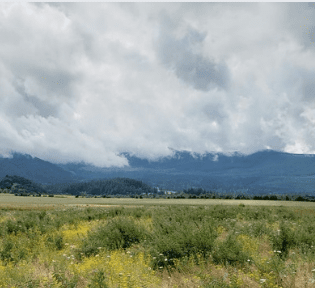
Rain and snowmelt from watersheds travel via many routes to the sea.
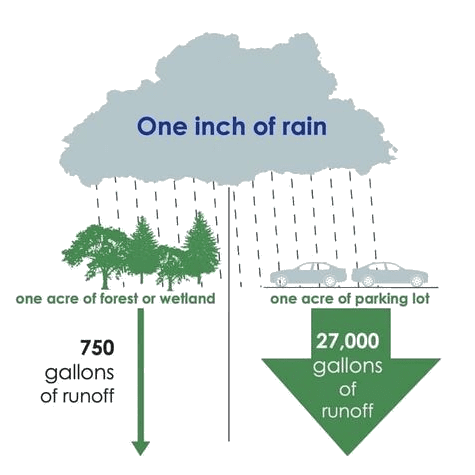
During periods of heavy rain and snowfall, water may run onto and off of impervious surfaces such as parking lots, roads, buildings, and other structures because it has nowhere else to go. These surfaces act as “fast lanes” that transport the water directly into storm drains. The excess water volume can quickly overwhelm streams and rivers, causing them to overflow and possibly result in floods. (NOAA. What is a watershed? )
Much of Oregon’s natural resource management is based on watersheds.
Watershed management organizes and guides land and other resource used to provide desired goods and services without adversely affecting soil and water resources. This type of management also recognizes the interrelationships among land use, soil, water and linkages between upland and downstream areas.