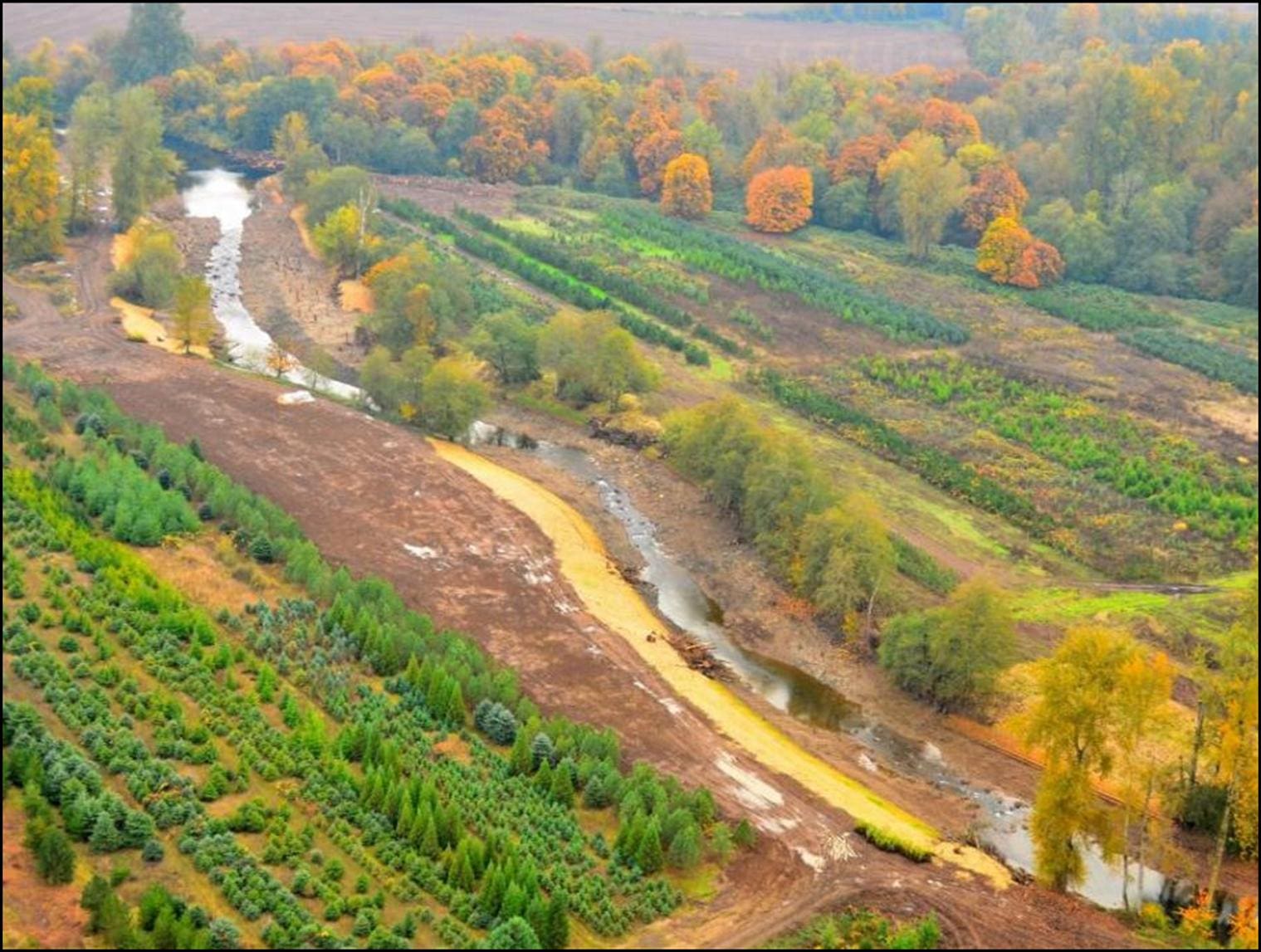

background
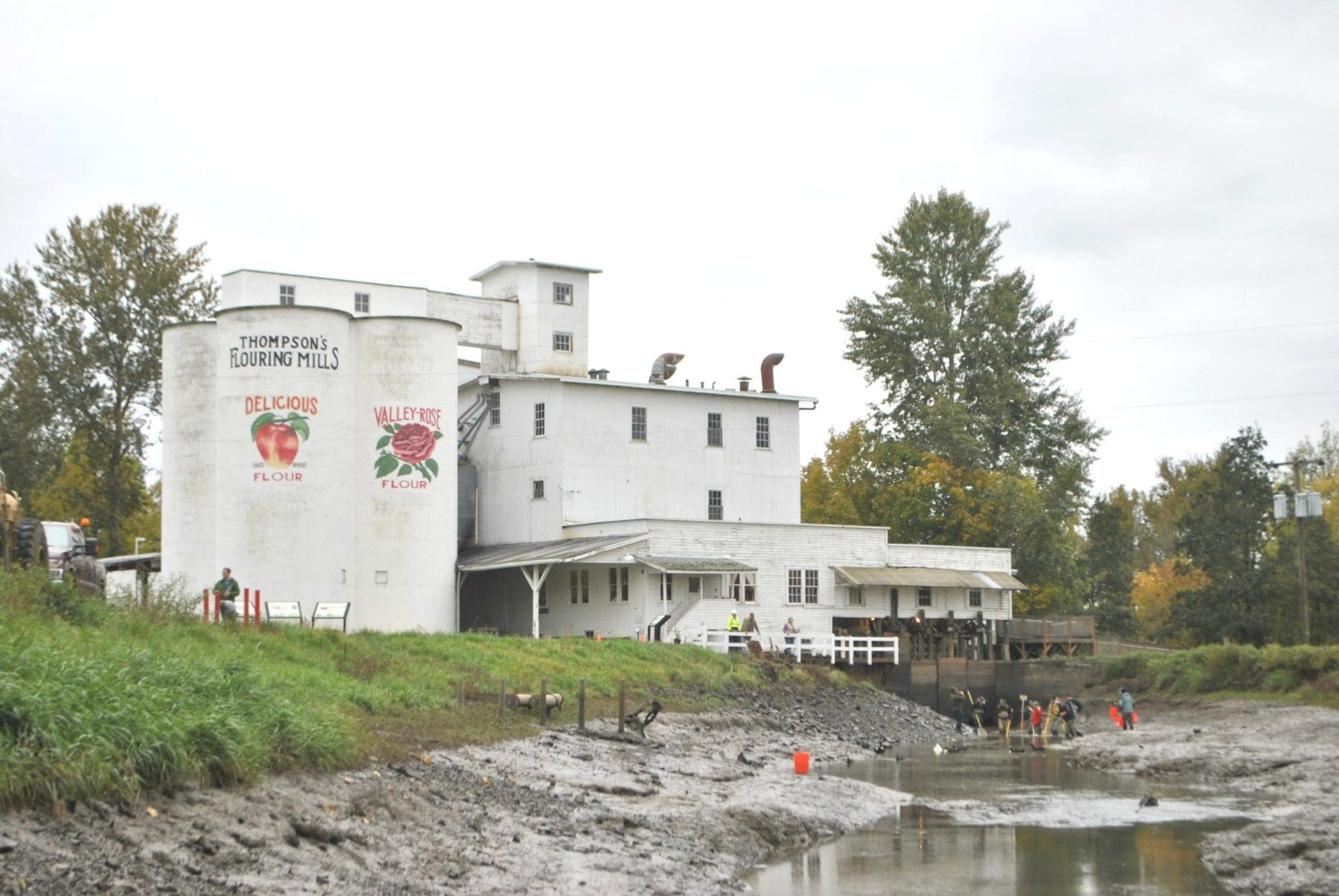
The Sodom and Shearer Dams were managed by OPRD to control operational flows delivered to the Mills. The Mills became a State Heritage Site in 2004, with the property’s special significance being the oldest water-powered grain mills in the state with a system of waterways, dams, control gates, ditches and dikes that had diverted water from the Calapooia River to the Mills’ head gates since 1858.
The Sodom ditch was built in the late 1800’s upriver of the Mills to serve as a high water over-flow channel to divert water around the Mills and minimize flooding along that reach of the Calapooia River. Unfortunately, the Sodom ditch was too effective and shortly after its construction, began to capture nearly the entire flow of the Calapooia River. The Sodom Dam was built around 1890 to divert river water during low flows out of the Sodom ditch and back into the Calapooia River.
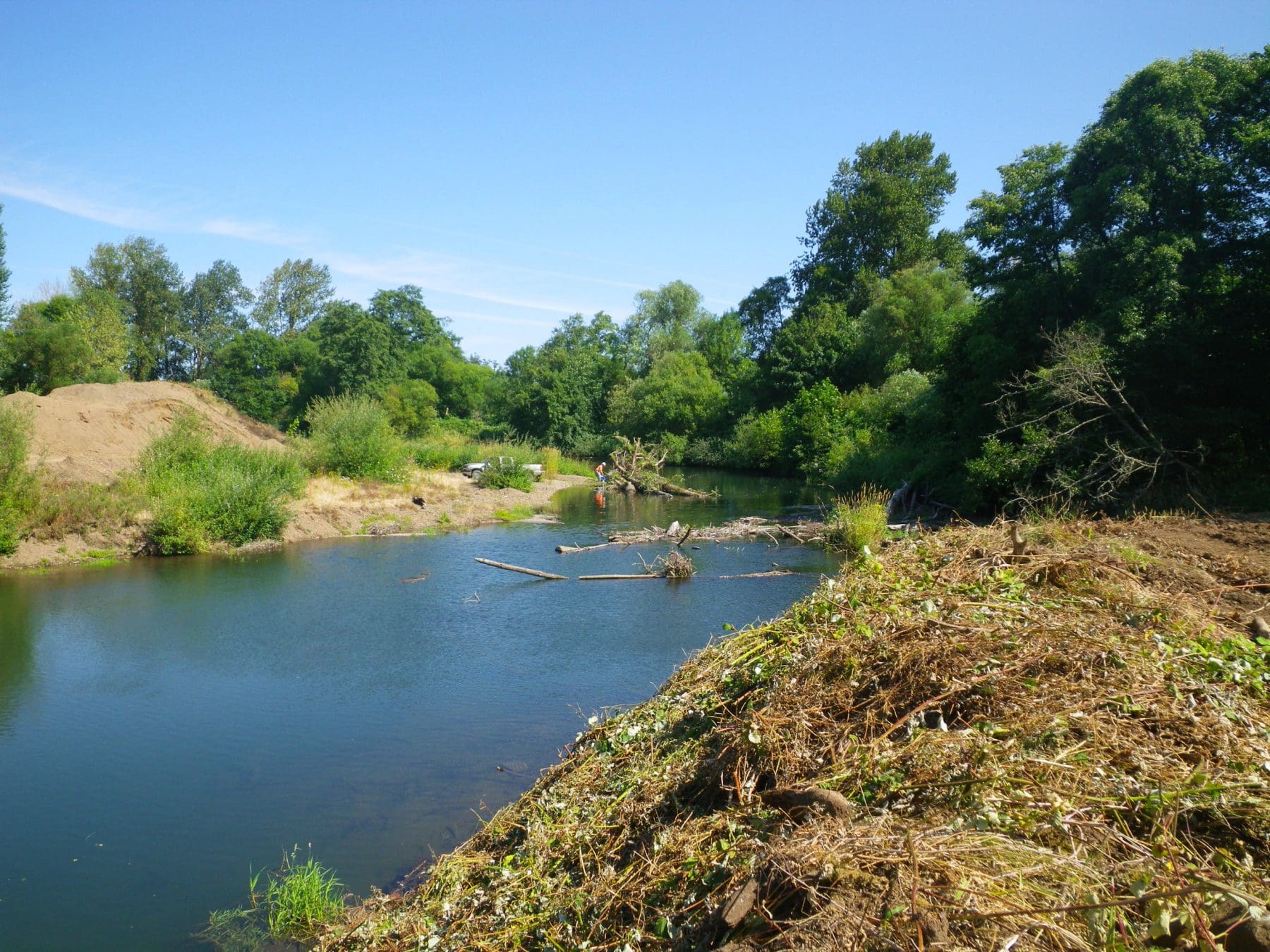
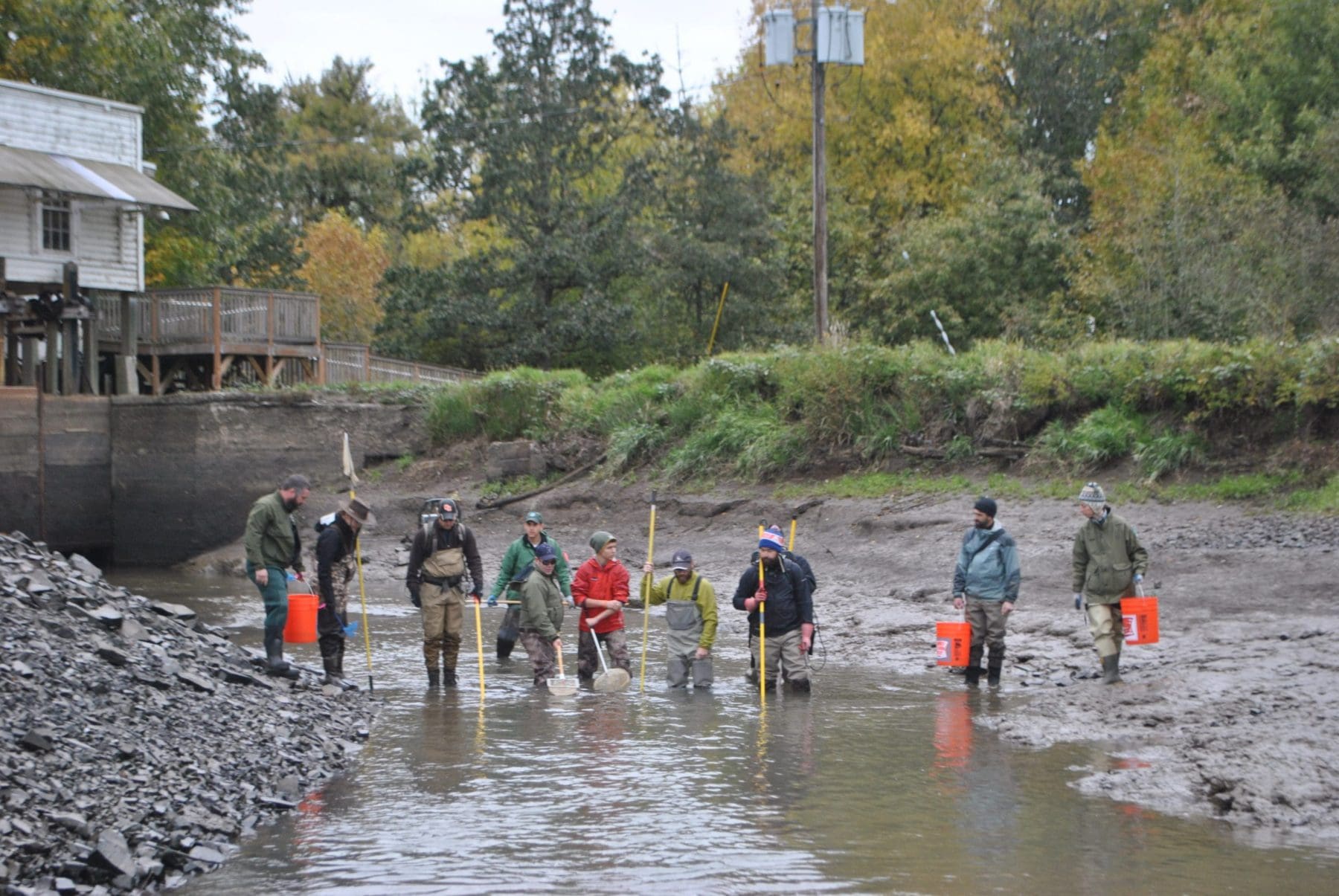
The Mills operated to provide flows to power the Mills’ grain processing facility for over 120 years. Beginning in the 1970s, it was no longer economically feasible to grind grain – little grain was being produced in the area – and the Mills began to instead generate electricity that was sold to the energy company, PacifiCorps.
The original structure was a push-up dam, then later a wooden crib dam and finally in 1957, the concrete structure that was removed. The dam was an integrated weir and pool fishway, located approximately 1,400-ft downstream of the bifurcation of the Sodom Channel and the Calapooia River, just downstream from Calapooia RM 19.
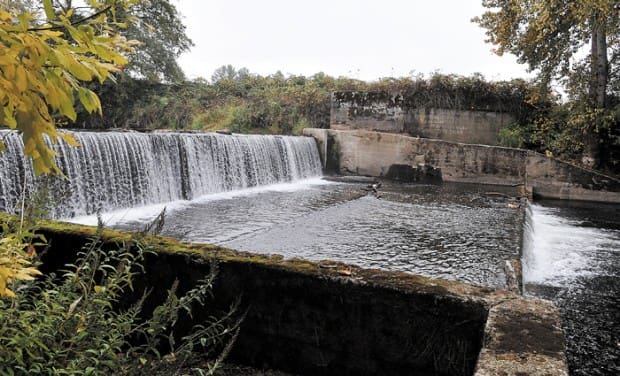
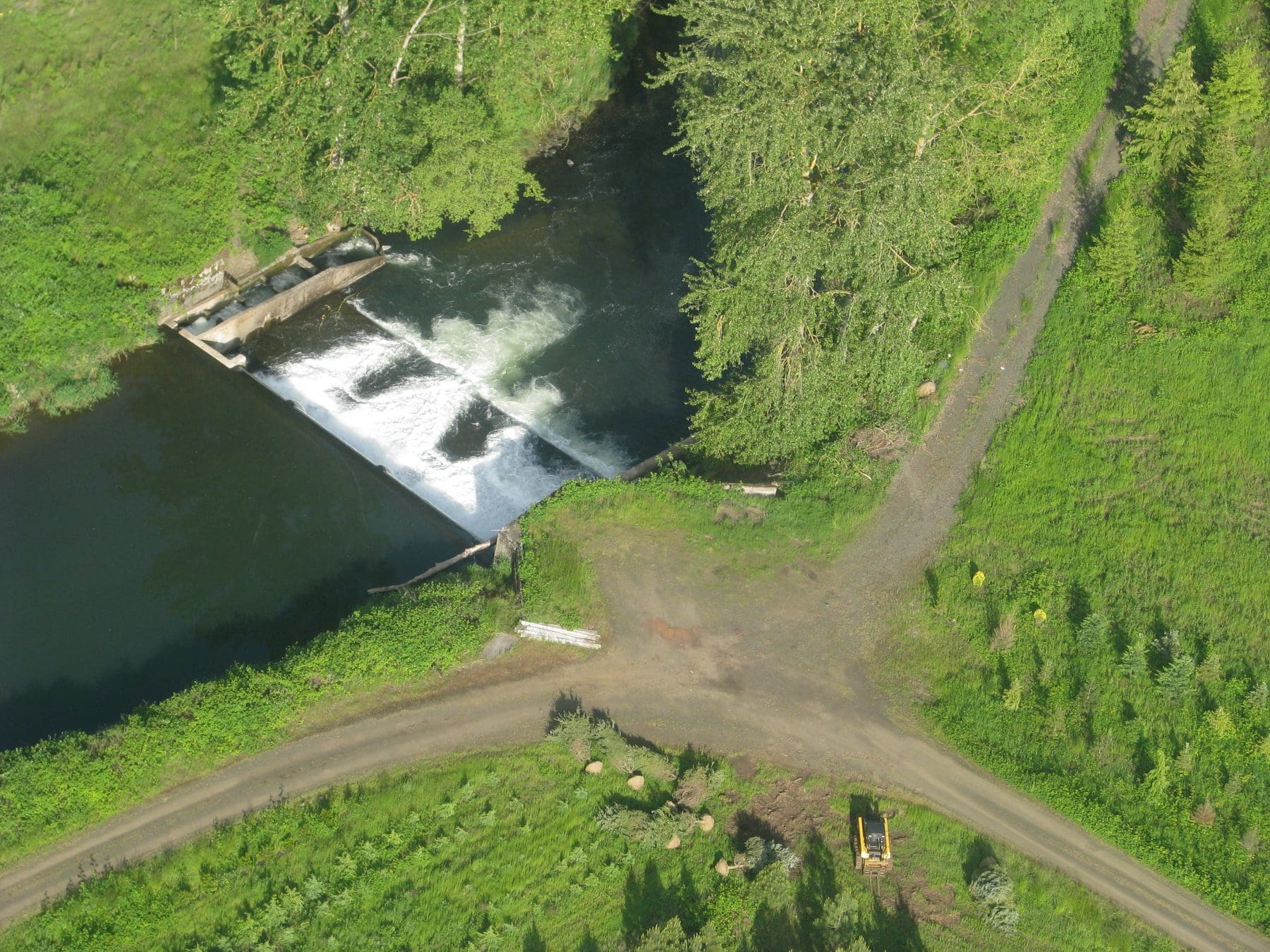
The Sodom Dam was approximately 11-ft in height from the outlet apron to the crest of the dam. Across the crest and the width of the fishway, the dam was 85-ft wide. The sides of the dam were bounded by concrete abutments that extend to a height of 10-ft above the crest of the dam. The abutments had concrete wingwalls that extend into the bank. The fishway was located on the west side of the dam. It was a pool-weir fishway with six pools. The fishway entrance was on the west side, in the scour pool below the dam.
The 1998 listing of winter steelhead and spring chinook as “threatened” under the federal Endangered Species Act, spurred state and federal natural resource agencies to examine this site more closely when it came time for the site to renew its Federal Energy Regulatory Commission (FERC) license. NOAA Fisheries, the federal agency responsible for enforcing the Endangered Species Act (ESA), determined fish passage at the dams associated with the Mills would be a necessity. This led to a lengthy multi-year discussion between the natural resource agencies, Pacificorps, Oregon Water Trust (now The Freshwater Trust) and the private owner over how to satisfy the new regulatory framework (cascading from the ESA listing) in order to surrender the property’s FERC license.
After several years of discussions and negotiations, in 2004, OPRD purchased the property, including the dams. Also in 2004, dam’s private owner sold 12 cfs of the property’s historic 1858 water rights to the Trust for transfer to instream rights.
Problems Associated with the Sodom Dam:
Deterioration
The dam was an aging structure that reaching its as-built life expectancy. There was significant deterioration of the fishway’s concrete with daylight visible through the fishway wall in a number of locations. Flows actively seeped through the wall of the fishway. Two of the six pools had severe abrasion from bed load with exposed rebar along the walls and floor.
Scour Abrasion
Some areas of concrete along the scour apron and lower portion of the dam had deteriorated or been abraded by bed load. Exposed rebar was evident at the toe of the three buttresses. Scour under the outlet apron had occurred along the center portion of the outlet edge in excess of 4-ft.
Non-Functioning Fish Ladder
The existing fish ladder did not meet current design criteria established by ODFW and NMFS. It did not have the appropriate jump/drop height in the pools.
Attraction conditions during high flows were inadequate because the first two pools of the fishway were submerged. Attraction conditions during low flows prevented migrating fish from finding the inlet to the ladder because the fish congregate at the spillway where flows are higher.
The ladder was frequently non-functioning due to accumulated debris from winter storms that is not removed because there was no access to the fish ladder during high flow conditions (the fish ladder was on the opposite bank from the only road to the dam)
Dam Removal Ojectives
Improve Water Availability for Fish
Water control facilities were inadequate to ensure water availability for fish in the Calapooia River, and flows are too warm in Sodom Ditch during hot summer months to support migrating and juvenile fish
Community & Stakeholder Participation
Prior to our technical assistance and outreach effort, there had not been community outreach efforts to develop a sustainable solution to the managed flow system that was dependent on significant partial barriers to fish passage, Sodom and Shearer Dams
Remove Fish Passage Barriers
The bifurcation becomes plugged with sediment and woody debris and requires maintenance in order to keep the Calapooia River channel active.
All the watershed’s spawning and rearing habitat for salmonids is upstream of these former dam sites. Steelhead and chinook once had to negotiate one or the other of these dams in order to reach the cool pools and spawning gravels in the upper watershed