

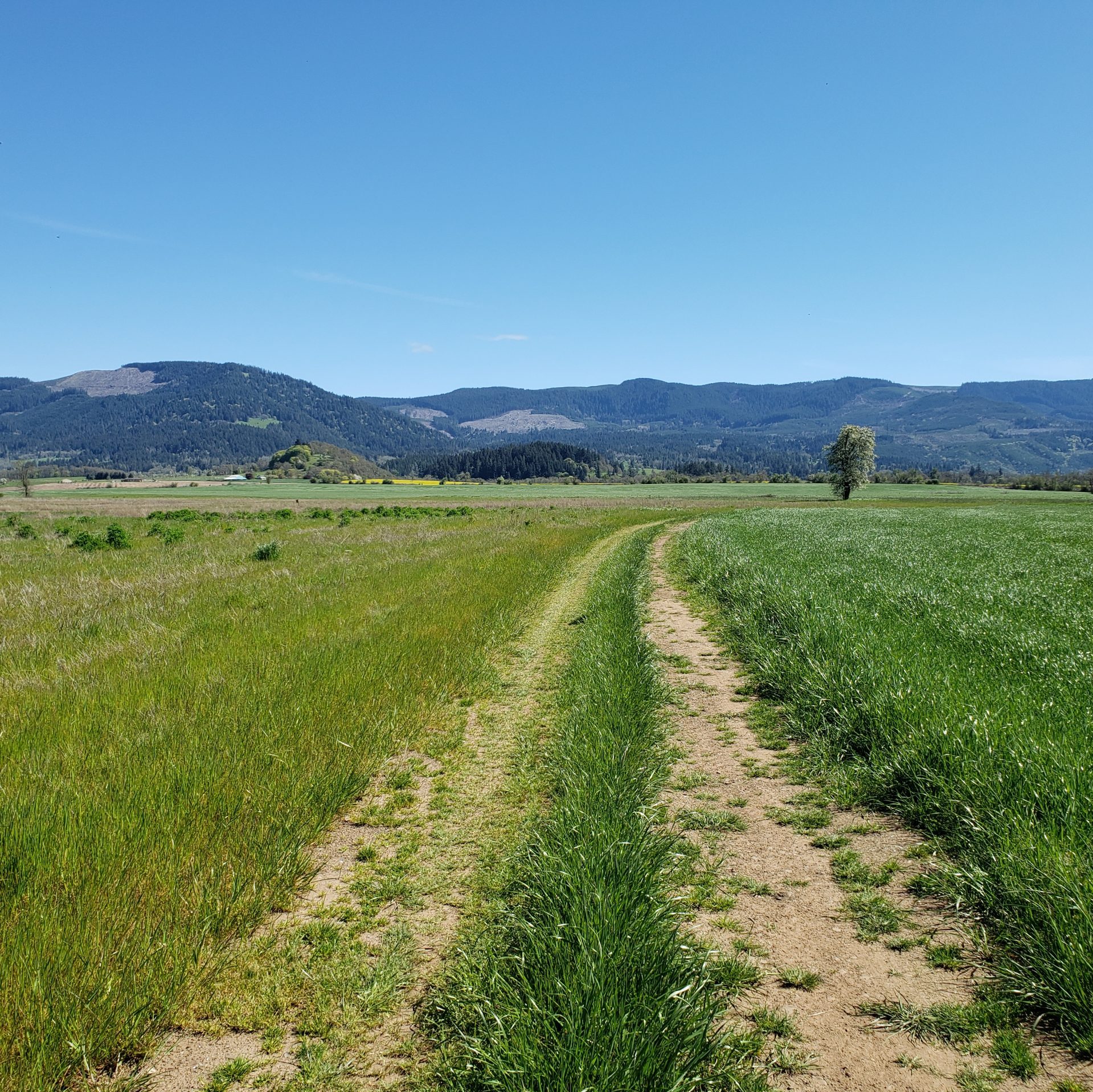
Tub Run Riparian & Wetland Prairie Restoration Project is located 8 miles south of Brownsville within the Calapooia Watershed Council’s service area. 

Once an abundant ecosystem within the Willamette Valley, native wetland prairies have declined dramatically in extent since the mid-1800s due to a variety of factors including agricultural conversion, urbanization, drainage, and colonization by invasive and woody vegetation.

background

Native riparian plant communities have also been impacted by introduced species colonization. In particular, pasture grasses, reed canary grass, and aquatic weeds such as water primrose have shifted historic food web productivity for prey resources important to juvenile salmonids (i.e. invertebrates). The Council has worked with a regional expert in managing water primrose.


Today, wetland prairie habitat is regarded as one of the most imperiled in the Willamette Valley ecoregion, with less than 2% of its historic range remaining (Johannessen et al. 1971, Towle 1982).
objective

Restoration components to be implemented include: restoring 36 acres of farmland to wetland prairie, and restoring 37 acres of degraded riparian habitat.

implementation

Winter 2019 the Calapooia WC, with the help of R. Franco Restoration, planted over 64,000 native trees and shrubs on 37 acres of riparian forest  to widen the buffer.

This enhanced riparian buffer will provide increased shading to buffer stream temperatures, provide future large wood recruitment to increase instream complexity, and filter run-off from nearby agricultural operations.

The species planted included big leaf maple, white alder, pacific willow, thimble berry, swamp rose and red osier dogwood.

In addition to work in the riparian zone, the council and landowner have been busy working to restore the 36 acres of wet prairie habitats. There, we have constructed seven vernal pools and reconnected a historic side-channel along Tub Run Creek.

The wet prairie was then seeded with native grasses and forbs.

outcome

Restoration components implemented to-date include: restoration of 36 acres of farmland to wetland prairie, and restoration of 37 acres of degraded riparian habitat.