
As a non-government nonprofit organization, the council is not involved in any inspection, investigation or reporting of environmental violations. Please contact the agencies below-
Reporting Water Usage Issues
District-02 Water Master, Lanaya Blakey
541-682-3620
As a non-government nonprofit organization, the council is not involved in any inspection, investigation or reporting of environmental violations. Please contact the agencies below-
Reporting Water Usage Issues
District-02 Water Master, Lanaya Blakey
541-682-3620
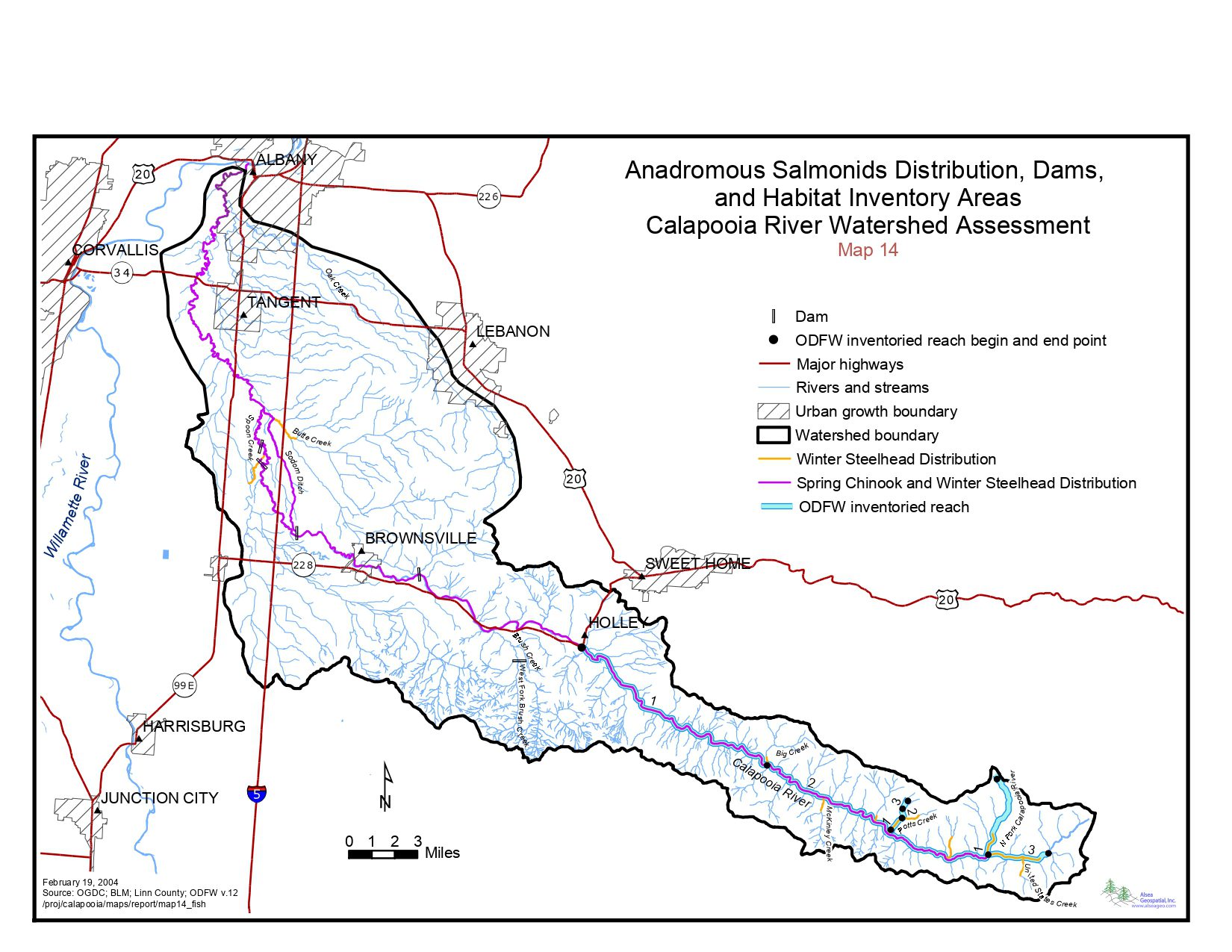
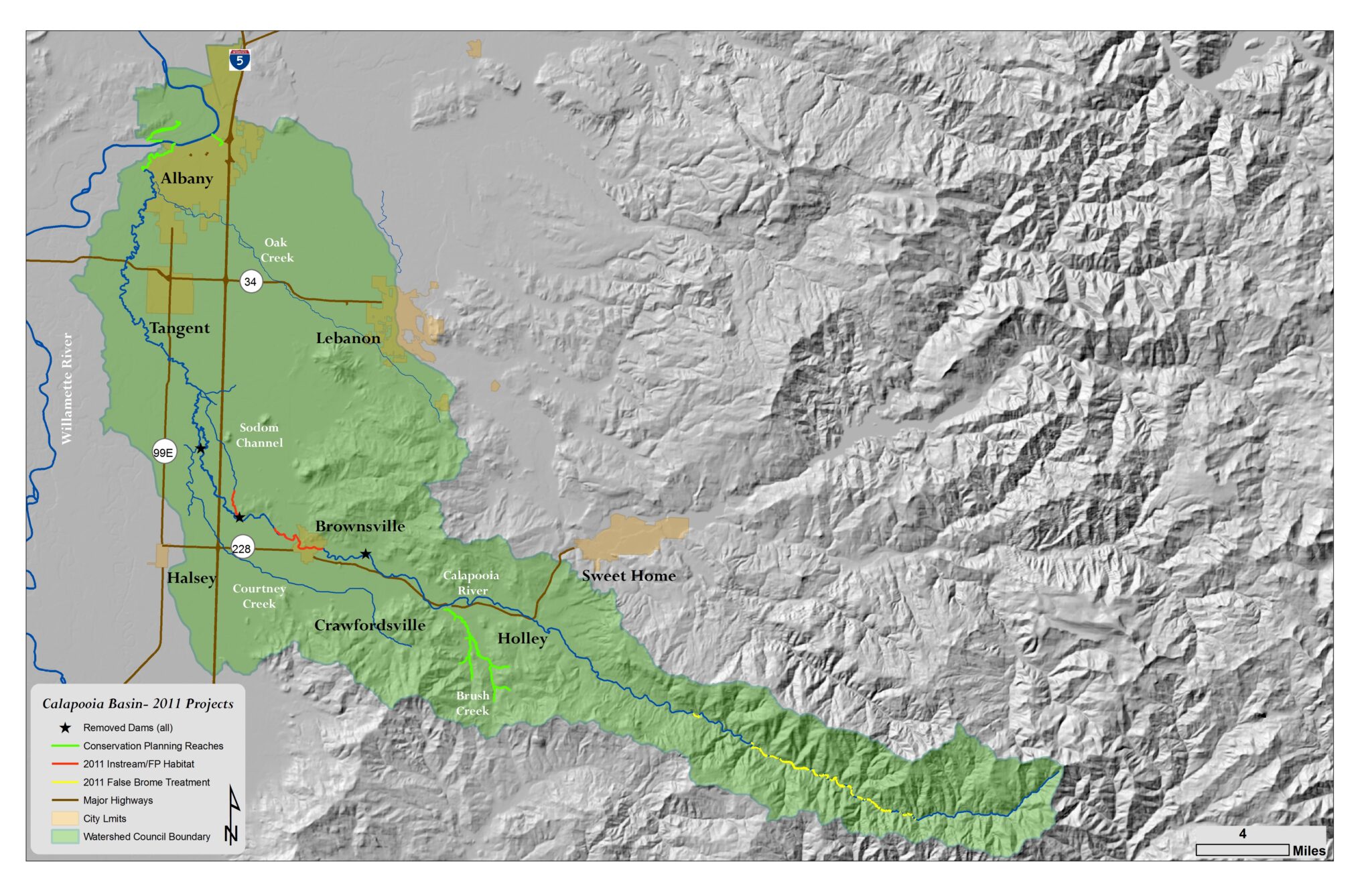
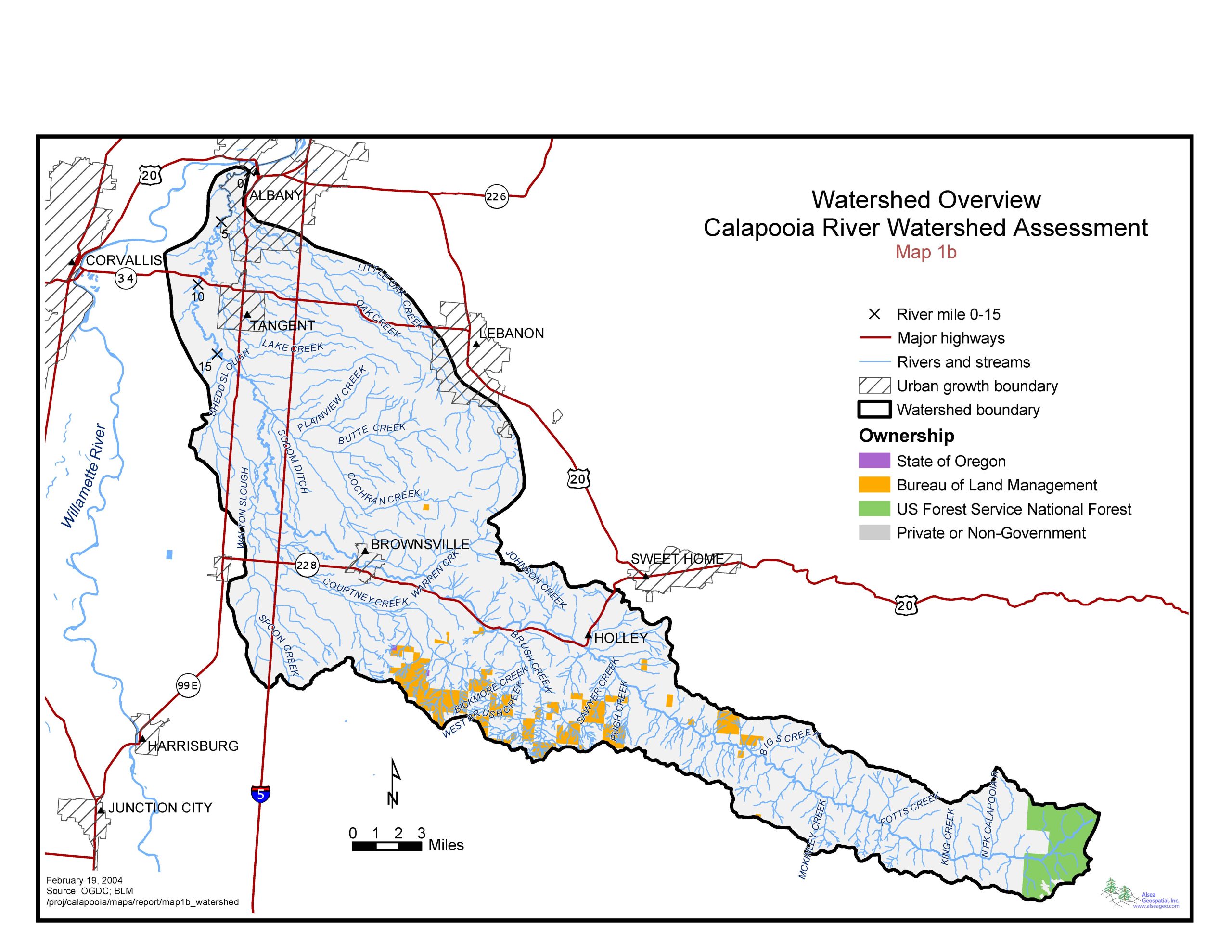
Calapooia Watershed Assessment (2004)
Calapooia River – Albany Assessment and Project Implementation Plan (2011)
Calapooia River Rapid Bio-Assessment (2015)
Calapooia River Fish Passage Report (2004)
Upper Calapooia Wild Winter Steelhead Monitoring Report (2022)
Ecological Review; Fall Birds and Bats in the Oxbow System, Albany, Oregon (2012)
Oak Creek Open Space Assessment and Management Plan (2016)
Middle Calapooia River Assessment and Implementation Plan (2008)
Childers Creek ODFW Aquatic Inventory Project Stream Report (2006)
Lower Calapooia-Santiam Conservation Strategy (2014)
Bowers State Park Alternatives Analysis (2014)
Bowers Rock Flood Plain Restoration Presentation (2020)
Calapooia Basin Rapid Bio-Assessment Snorkel Survey Brief (2014)
Cox Creek Confluence Restoration Post-Implementation Monitoring Report (2017)
As a non-government nonprofit organization, the council is not involved in any inspection, investigation or reporting of environmental violations. Please contact the agencies below-
Reporting Water Usage Issues
District-02 Water Master, Lanaya Blakey
541-682-3620
Across Oregon, motivated landowners are removing invasive plants, replacing culverts, restoring wetlands, establishing native plants, and taking large and small actions to enhance habitat for fish and wildlife. Landowners with an urban backyard, a few acres in the foothills of the Cascades, or a large ranch in eastern Oregon can all take action to benefit Strategy Species and Strategy Habitats.
However, a number of challenges slow progress toward conservation success. Landowners need to assess which aspects of a project they can do themselves, which aspects require assistance, and know whom to ask for assistance. Here are some agencies that can provide the information and support to help support these efforts of our local landowners.
Greenbelt Land Trust – Greenbelt Land Trust has protected 3,660 acres of critical habitats, rivers, trails, and working lands throughout the mid-Willamette Valley. GLT offers several tools to help willing landowners protect their land. They work with landowners to choose a protection strategy that meets their conservation goals and financial needs and that is consistent with GLT’s mission.
The Oregon Conservation Strategy – is a blueprint for conservation in Oregon and an overarching state strategy for conserving fish and wildlife. It provides a shared set of priorities for addressing Oregon’s conservation needs. The Conservation Strategy brings together the best available scientific information, and presents a menu of recommended voluntary actions and tools for all Oregonians to define their own conservation role. The goals of the Conservation Strategy are to maintain healthy fish and wildlife populations by maintaining and restoring functioning habitats, preventing declines of at-risk species, and reversing declines in these resources where possible.
United States Department of Agriculture (USDA) -Farm Services Agency: Conservation Programs – oversees a number of voluntary conservation-related programs. These programs work to address a large number of farming and ranching related conservation issues including: Drinking water protection, Reducing soil erosion, Wildlife habitat preservation, Preservation and restoration of forests and wetlands, Aiding farmers whose farms are damaged by natural disasters.
The Nature Conservancy – For over 50 years, TNC has worked to protect forest and grasslands across Oregon—and since 2007 has also helped manage marine reserves and marine protected areas off the coast.
Willamette Partnership – Helping cities and organizations across the West change how they build infrastructure, protect critical habitat and water sources, and manage farms and forests as a way to strengthen community resilience.
United State Department of Agriculture (USDA)-Natural Resources Conservation Services Oregon – NRCS works with partners to develop local Conservation Implementation Strategies to help agricultural producers in those targeted areas implement conservation practices that address the resource concerns. Two current programs are being offered for landowners: Oak Habitat Restoration & Forest Resistance and Resilience. These programs offer technical and financial assistance to private landowners and operations interested in preserving natural resources on the land.
State of Oregon Conservation Reserve Enhancement Program (CREP) – The Conservation Reserve Enhancement Program (CREP) is a voluntary program for agricultural landowners. This unique state and federal partnership allows landowners to receive incentive payments from the U.S. Department of Agriculture (USDA) Farm Service Agency (FSA) for establishing long-term, riparian buffers on eligible land. The purpose of the program is to restore, maintain, and enhance streamside areas along agricultural lands to benefit fish, wildlife, and water quality.
Linn Soil & Water Conservation District – has responsibility for the natural resource programs; control and prevention of soil erosion, prevention of flood water and sediment damage, conservation and development of water resources, water quality management and protection (both surface and groundwater) and promotion of health, safety and general welfare of the people of Linn County and the State of Oregon.
Field Guide to Common Fish of the Willamette Valley Floodplain – from Oregon State University.
Willamette River Basin Planning Atlas – an in depth report on Trajectories of Environmental and Ecological Change for the Pacific Northwest Ecosystem Research Consortium.
Stream-A-Syst: A Tool to Help Your Examine Stream Conditions on Your Property.
Guide to Placing Large Wood in Streams – ODFW
Oregon Aquatic Habitat Restoration and Enhancement Guide – Oregon Plan for Salmon and Watersheds
Restoring Salmon Habitat for a Changing Climate, et al 2012 RRA
Conflict Resolution in Water Resources: Global Perspective and Local Successes by Aaron T Wolf, Ph.D. Department of Geosciences, OSU.
Biological and water quality responses from hydrologic disturbances (Calapooia River), Danehy 2011
Impact of land use patterns and agricultural practices on water quality in the Calapooia River Basin of western Oregon Journal of Soil and Water Conservation
Vegetation is a natural part of river ecosystems providing shade and cover; promoting bank stability; enhancing physical in-channel features; providing an input of woody debris; filtering sediment and serving as a source of nutrients to support fauna and flora. Management of vegetation in and alongside watercourses is currently undertaken for a range of purposes including agriculture, recreation and flood risk management. Where management is required to maintain the use of the channel, good practice vegetation management measures promote activities which support diversity of vegetation, allow natural regeneration and prevent the spread of non-native, invasive species. – Environment Agency Gov.UK
Oregon State University Extension Catalog: Weeds and Invasive Species – A comprehensive resource for publications relating to forestry for landowners from OSU.
The Rapid Revegetation Approach – Publication regarding the loss of native riparian, vegetation and dominance of invasive species in the Pacific Northwest. Peter Guillozet, Kendra Smith and Kathleen Guillozet.
Oregon State University Extension Catalog: Forest Health, Insects and Disease – Selection of publications regarding forest health.
Live staking guide from Sound Native Plants Certain species native to the Pacific Northwest will grow new plants from cut sections of branches planted into moist soil. We find that willows and black cottonwood generally have the highest success rates. Cuttings are relatively inexpensive and simple to install-under the right conditions, they are easy and economical to plant.
Pollinator guide from Xerces.org Pollinators in natural areas support diverse plant communities, wildlife food webs, and adjacent farms. Incorporating pollinator needs into a site management plan will result in excellent habitat for all wildlife of all types.
Reed canary grass guide from Invasive.org Reed canary grass is known for dense monocultures and is difficult to control. Herbicide application in late summer or early fall provides the most effective control especially for large populations. Cutting of reed canary grass is largely unsuccessful due to the rapid regrowth of the plant.
Native vs Invasive Species – A picture guide of native plants in the Pacific Northwest and their invasive imitators.
White Oak Restoration, BLM – Less than 1% of oak-dominated habitats are protected in parks or reserves. Private landowners hold the key to maintaining this important natural legacy.
A Practical Guide for Oak Release – by Constance A. Harrington and Warren D. Devine
Wetland Prairie Restoration Manual from Cascade Prairie Oak Partnership
Shade Tool – A tool for assisting municipalities in developing riparian shade inventories from Science Direct
United State Department of Agriculture (USDA)-Natural Resources Conservation Services Oregon – NRCS works with partners to develop local Conservation Implementation Strategies to help agricultural producers in those targeted areas implement conservation practices that address the resource concerns. Two current programs are being offered for landowners: Oak Habitat Restoration & Forest Resistance and Resilience. These programs offer technical and financial assistance to private landowners and operations interested in preserving natural resources on the land.
Neque porro quisquam est, qui dolorem ipsum quia dolor sit amet, consectetur, adipisci velit, sed quia non numquam eius modi tempora incidunt ut labore et dolore magnam aliquam quaerat voluptatem. Ut enim ad minima veniam, quis nostrum exercitationem ullam corporis suscipit.
Willamette Partnership provides a comprehensive list of resources, financial & technical assistance, and health services to communities recovering from wildfires.
Oregon State University Extension Service is offering a regular Wednesday webinar series to educate and support wildfire preparedness.
Wildfire Information from Direct Energy provides a helpful and easy guide to preventing and preparing for potential wildfires.
Oregon Watershed Enhancement Board’s 2008 Guide for Small Dam Removal, written by Denise Hoffert-Hay
OSU Presentation of Monitoring Results, January 2010
Journal articles relevant to the environmental outcomes of dam removal:
- List of all OSU publications, dissertations, presentations related to the Brownsville Dam Removal monitoring project, 2008-2011
- Kibler KM, Tullos DD, Kondolf GM. 2010. Learning from dam removal monitoring: challenges to selecting experimental design and establishing significance of outcomes. River Research and Applications. DOI: 10.1002/rra.1415.
- Kibler KM, Tullos DD, Kondolf GM. 2011. Evolving expectations of dam removal outcomes: downstream geomorphic effects following removal of a small, gravel-filled dam.
- Journal of the American Water Resources Association (JAWRA) Evolving Expectations of Dam Removal Outcomes: Downstream Geomorphic Effects Following Removal of a Small, Gravel-Filled Dam
Interested in Developing a Project on Your Property?
If you’re curious about implementing habitat restoration on your property, reach out to discuss!